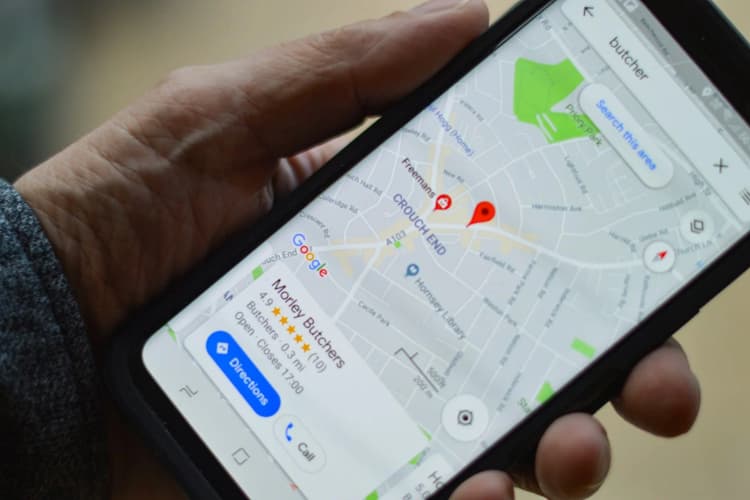

Google reviews are important for local businesses because they appear where customers already make high-intent decisions: Google Search and Google Maps. Reviews help people compare nearby companies, understand recent customer experiences, assess service quality, and decide whether to call, visit, book, or buy.
They also give businesses direct feedback about what customers value and where operations need improvement.
Review count alone does not guarantee higher rankings or more sales. The complete picture includes rating, recency, relevance, comment quality, owner responses, profile accuracy, customer experience, local competition, and many other search and conversion factors.
This guide explains why Google reviews matter, how they influence local purchase decisions, and how businesses can build a stronger review process without relying on fake engagement or rating manipulation.
If you want a structured Google Business Profile campaign with transparent packages, gradual delivery, and dashboard tracking, compare current options on the Buy Google Reviews service page.
Why are Google reviews so important?
Google reviews combine several functions in one public channel:
- Social proof for prospective customers
- First-hand descriptions of customer experiences
- Visible star ratings
- Recent signals about business activity
- Feedback for owners and managers
- Opportunities for public customer service
- Context within Google Search and Maps
- Information that can support purchase decisions
Customers do not need to visit a separate review website. Ratings and comments can appear alongside the business name, location, hours, photographs, phone number, directions, and website.
That visibility makes Google reviews especially relevant for businesses competing in a local market.
Google reviews influence first impressions
A Google Business Profile may be one of the first things a potential customer sees.
Before opening the website, a customer may already notice:
- Average rating
- Total number of reviews
- Date of the latest feedback
- Review snippets
- Business responses
- Customer photographs
- Common themes
- Comparison with nearby competitors
Those signals help form an initial impression in seconds.
A strong profile does not need a perfect five-star rating. A credible range of detailed experiences, recent activity, and professional responses can be more trustworthy than a profile filled with generic praise.
Reviews reduce uncertainty during local search
Local purchases often involve uncertainty:
- Will the restaurant match the photographs?
- Will the contractor arrive on time?
- Is the clinic organized and professional?
- Does the store resolve problems?
- Is the hotel clean?
- Does the agency communicate clearly?
- Can the repair company handle the issue?
Customer reviews provide context that a business description cannot provide on its own.
Detailed feedback can explain:
- What was purchased
- Which service was used
- How staff communicated
- Whether delivery was on time
- How a problem was resolved
- What the location was like
- Whether the customer would return
This information helps prospective customers judge whether the business fits their needs.
Google reviews support customer trust
Trust is not created by star rating alone.
Customers also assess:
- Whether comments sound specific and natural
- Whether reviews cover a realistic range of experiences
- Whether feedback is recent
- Whether the business responds
- Whether critical reviews receive professional replies
- Whether photographs match the location
- Whether claims are consistent across other channels
Profiles with copied, repetitive, exaggerated, or irrelevant comments can reduce trust even when the rating is high.
Genuine feedback is valuable because it gives customers evidence they can evaluate independently.
Reviews can affect calls, bookings, visits, and purchases
A customer comparing several local businesses may use reviews to decide which profile deserves the next action.
Depending on the business, that action could be:
- Calling
- Requesting directions
- Visiting the website
- Booking an appointment
- Making a reservation
- Sending a message
- Requesting a quote
- Placing an order
Reviews can support conversion by answering practical questions and reducing perceived risk.
They do not guarantee conversion. Price, location, availability, offer quality, website experience, photographs, services, and competitor strength also matter.
Why reviews matter for Google Maps
Google Maps is not only a navigation tool. Customers use it to discover and compare:
- Restaurants
- Shops
- Medical and professional services
- Home service providers
- Hotels
- Attractions
- Automotive businesses
- Local offices
Reviews are displayed directly within map listings and location profiles.
For businesses that depend on physical visits or service areas, an accurate and active Maps presence can influence whether a customer requests directions or chooses another listing.
Maintain the complete profile alongside the review program:
- Correct business name
- Accurate category
- Current address or service area
- Phone number
- Opening hours
- Website
- Services and attributes
- Relevant photographs
Reviews cannot compensate for inaccurate profile information.
Do Google reviews help local SEO?
Reviews can be part of a broader local search strategy, but no single review metric guarantees rankings.
Google uses many signals when presenting local results. A business should not assume that purchasing a particular number of reviews will produce a fixed position.
A sustainable local SEO strategy can include:
- A complete Google Business Profile
- Accurate business information
- Relevant categories
- Consistent local citations
- Useful location and service pages
- Technical website quality
- Local links and mentions
- Genuine customer reviews
- Professional review responses
- Strong customer experience
Review manipulation can create enforcement risk instead of lasting search value.
Review recency matters to customers
A strong historical rating is helpful, but customers also want to know what the business is like now.
Recent feedback can answer questions such as:
- Is the business still operating normally?
- Has service quality changed?
- Are recent customers satisfied?
- Are old complaints still relevant?
- Is management responding?
- Have renovations, staff, or products changed?
A consistent customer invitation process is usually more useful than collecting a large volume once and then remaining inactive.
Review quantity provides context
Customers often interpret a rating together with the number of reviews.
For example:
- A high rating based on very few reviews provides limited evidence.
- A slightly lower rating based on many detailed reviews may feel more credible.
- A large count with generic comments can appear suspicious.
- A low count may simply reflect a new or low-frequency business.
The appropriate review volume depends on the industry, age, location, customer frequency, and competitors.
Businesses should focus on a repeatable process rather than an arbitrary target disconnected from actual customer activity.
Detailed comments are more useful than ratings alone
A star rating summarizes sentiment, but a comment explains the experience.
Useful review content may discuss:
- Product or service selected
- Communication
- Speed
- Professionalism
- Cleanliness
- Quality
- Convenience
- Problem resolution
- Value
- Return intent
Businesses should not script fabricated stories or require customers to include promotional keywords.
A neutral prompt such as “Please share your honest experience” preserves the customer’s independence.
Negative reviews can still provide value
Negative feedback is uncomfortable, but it can reveal:
- Recurring service delays
- Product defects
- Billing confusion
- Communication gaps
- Staff training needs
- Location problems
- Incorrect expectations
- Weak complaint handling
A professional response can show future customers that the business listens and takes responsibility.
Do not pressure customers to delete criticism or offer a reward only if they change a negative review. Google prohibits incentives tied to posting, editing, or removing feedback.
Why responding to Google reviews is important
Responses turn a static review profile into a visible customer-service channel.
Good responses can:
- Thank customers
- Clarify misunderstandings
- Acknowledge problems
- Explain corrective action
- Move private details into an appropriate support channel
- Demonstrate professionalism
- Show that management is active
Avoid:
- Revealing private customer information
- Arguing aggressively
- Copying the same reply everywhere
- Accusing reviewers without evidence
- Adding promotional language to every response
- Promising an outcome the business cannot deliver
Responses should be timely, relevant, calm, and proportionate.
Why Google reviews matter for different local businesses
Restaurants
Customers may compare food quality, service, cleanliness, atmosphere, wait time, pricing, dietary options, and photographs.
Home services
Reviews can describe punctuality, communication, workmanship, cleanup, quoting, and problem resolution.
Healthcare and professional practices
Feedback may cover scheduling, staff communication, organization, accessibility, and the overall service experience. Responses must protect privacy.
Retail stores
Customers may discuss product availability, staff assistance, returns, store condition, and convenience.
Hotels and hospitality
Reviews often influence expectations about rooms, cleanliness, staff, amenities, location, and issue resolution.
Agencies and B2B services
Comments can provide context about communication, process, expertise, delivery, and long-term relationships.
The most useful review themes differ by industry, so businesses should avoid generic scripts.
Reviews help multi-location businesses identify differences
For a multi-location brand, aggregate ratings can hide operational variation.
Location-level review reporting can reveal:
- Strong and weak branches
- Different customer expectations
- Staff training gaps
- Recurring location issues
- Response delays
- Changes after new management
- Regional service patterns
Each review should be directed to the Business Profile connected to the actual customer experience.
Google reviews provide business intelligence
Reviews are not only marketing assets. They are a source of unstructured customer data.
Businesses can categorize feedback by:
- Product
- Service
- Location
- Staff interaction
- Speed
- Quality
- Price
- Communication
- Convenience
- Complaint type
Track changes over time and connect recurring themes to operational improvements.
Do not rely only on the average rating. A stable rating can hide a growing complaint category.
How to get more genuine Google reviews
Ask after a completed experience
Send a request after a purchase, visit, appointment, delivery, installation, or resolved support case.
Make the request neutral
Ask for honest feedback rather than a positive or five-star review.
Use a direct review link
Reduce unnecessary steps by linking to the correct Google Business Profile review form.
Add a QR code where appropriate
Use QR codes on receipts, counter cards, packaging, or follow-up documents when customers can scan them voluntarily.
Ask eligible customers consistently
Avoid review gating. Do not direct only satisfied customers to Google while sending dissatisfied customers elsewhere.
Train staff
Employees should understand when to ask, how to remain neutral, and which incentives or scripts are prohibited.
Monitor and respond
Review the feedback, answer appropriately, and use recurring themes for improvement.
Businesses that need structured campaign planning can explore Google review options for local businesses.
Can businesses offer discounts for Google reviews?
Google prohibits merchants from offering payment, discounts, free products, or services in exchange for posting a review or changing or removing a negative review.
The concern is not only the value of the reward. An incentive can influence whether customers post and what sentiment they express.
Businesses can ask genuine customers for honest feedback without attaching a reward or requiring a particular rating.
Why fake reviews undermine the value of the system
Fake reviews distort the information customers use to make decisions.
They can:
- Inflate or reduce ratings
- Misrepresent customer experiences
- Disadvantage honest competitors
- Reduce trust in the platform
- Lead to filtered or removed content
- Create profile restrictions
- Trigger payment disputes
- Create consumer-protection risk
Labels such as real, verified, organic, Local Guide, or non-drop do not make a fabricated experience genuine.
How to measure the value of a review program
Track more than total review count.
Useful metrics include:
- Invitation delivery rate
- Customer participation rate
- Number of new genuine reviews
- Review recency
- Average response time
- Percentage of reviews answered
- Rating distribution
- Common positive themes
- Common complaint themes
- Profile calls, directions, and website visits
- Location-level differences
- Issues resolved after feedback
Do not assume that every change in calls or rankings was caused by reviews. Seasonality, advertising, competition, pricing, website changes, and demand also influence results.
Common mistakes local businesses make
Asking only happy customers
This can become review gating and distort the feedback process.
Requesting five stars
The customer should choose the rating.
Offering a reward
Discounts, money, products, or services tied to a review can violate Google’s policies.
Buying large bulk packages
Activity disconnected from genuine customer volume creates authenticity and moderation concerns.
Ignoring negative feedback
Unanswered complaints can influence future customers and allow recurring problems to continue.
Using identical responses
Generic replies make the business appear less attentive.
Focusing only on the average rating
Review content, recency, responses, and operational themes can be more informative than a small rating change.
Frequently asked questions
Why do Google reviews matter for local businesses?
They appear during local search and Maps research, provide customer context, support trust, influence comparison decisions, and give businesses operational feedback.
Do Google reviews increase sales?
Credible reviews can support calls, bookings, visits, and purchases, but they do not guarantee revenue. Price, location, availability, service quality, profile completeness, website experience, and competition also matter.
How many Google reviews does a local business need?
There is no universal number. Compare the business’s customer volume, age, industry, location, review frequency, and competitors. Consistent genuine feedback is more useful than an arbitrary target.
Is a perfect five-star rating necessary?
No. Customers often value detailed, recent, credible feedback and professional responses. A realistic mix of experiences can appear more trustworthy than uniform generic praise.
Should businesses respond to every Google review?
Respond where a reply adds value, especially to questions, complaints, detailed praise, and service-recovery opportunities. Avoid repetitive or privacy-sensitive responses.
Can negative Google reviews help a business?
Yes. They can reveal operational problems and provide an opportunity to demonstrate professional complaint handling. Manipulating or suppressing legitimate criticism is not a sustainable solution.
Are Google reviews important for local SEO?
They can contribute to the broader local search and customer-conversion picture, but no number of reviews guarantees a ranking. Profile accuracy, relevance, distance, website quality, citations, links, and other factors also matter.
Final answer
Google reviews are important because they connect local discovery, customer trust, purchase research, public feedback, and reputation management in one highly visible profile.
The strongest review strategy is not simply to maximize quantity. Local businesses should focus on:
- Genuine customer experiences
- Neutral and consistent review requests
- Accurate Google Business Profile information
- Recent and relevant feedback
- Professional responses
- Location-level monitoring
- Operational improvements based on review themes
To compare structured options for your profile, visit Buy Google Reviews for Your Business. For guidance on risks and expected outcomes, read Is Buying Google Reviews Worth It?.
For industry-specific guidance on using Google Reviews effectively, see pages for restaurants, hotels, home services, and healthcare and dental clinics.