
Review Solutions for Home Service Businesses
Help local customers choose your company with feedback about workmanship, reliability, communication, scheduling, and care for their property.
Buy Trustpilot Reviews
Choose a structured Trustpilot review campaign with transparent pricing, gradual delivery, and clear progress tracking.
View Service- Coming soon
Buy Google Reviews
Explore structured Google review campaign options for your business with clear expectations, gradual delivery, and transparent support.
View Service - Coming soon
Buy Google Play Reviews
Explore Google Play app review and rating campaigns with gradual delivery, clear tracking, and support for Android publishers.
View Service - Coming soon
Buy Yelp Reviews
Explore Yelp review campaigns for your business with gradual delivery, clear tracking, and transparent support.
View Service


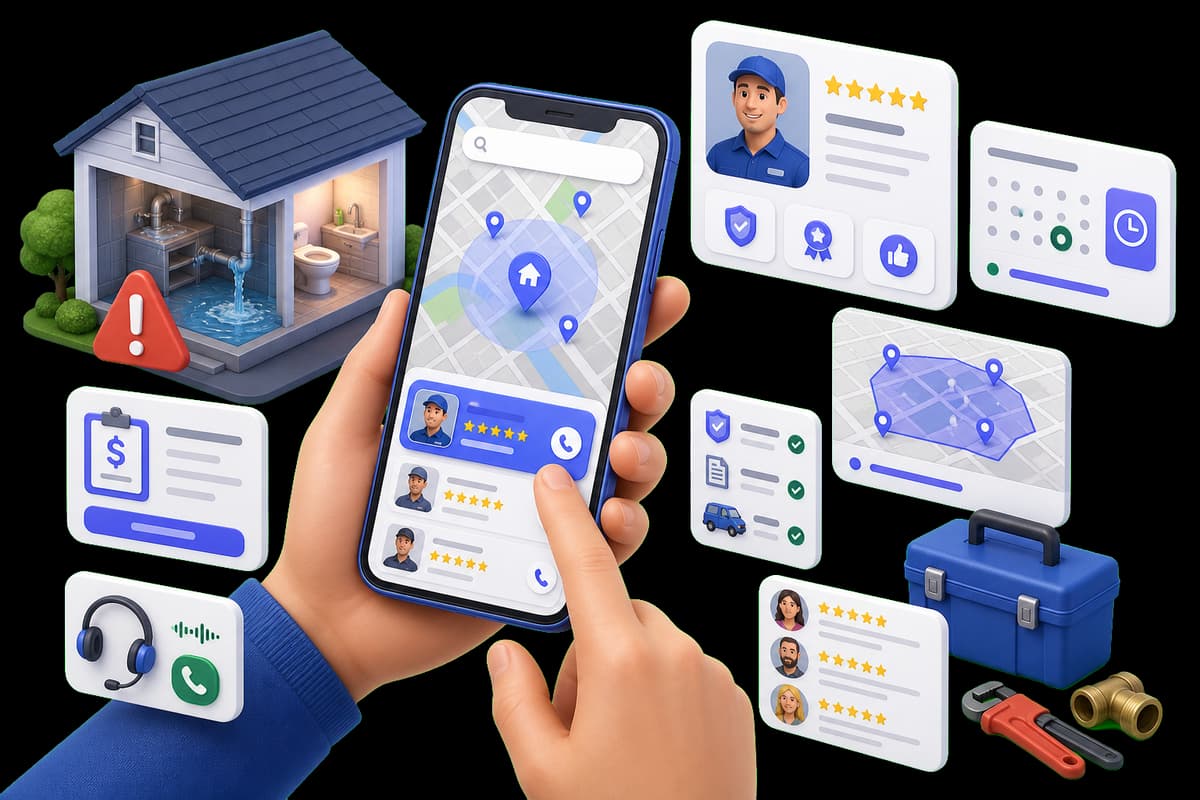
Build Confidence When Customers Need Help Nearby
Customers searching for a contractor or technician often compare proximity, availability, ratings, recent comments, photos, licenses, and response quality. Reviews can reduce uncertainty before someone invites a provider into their home.
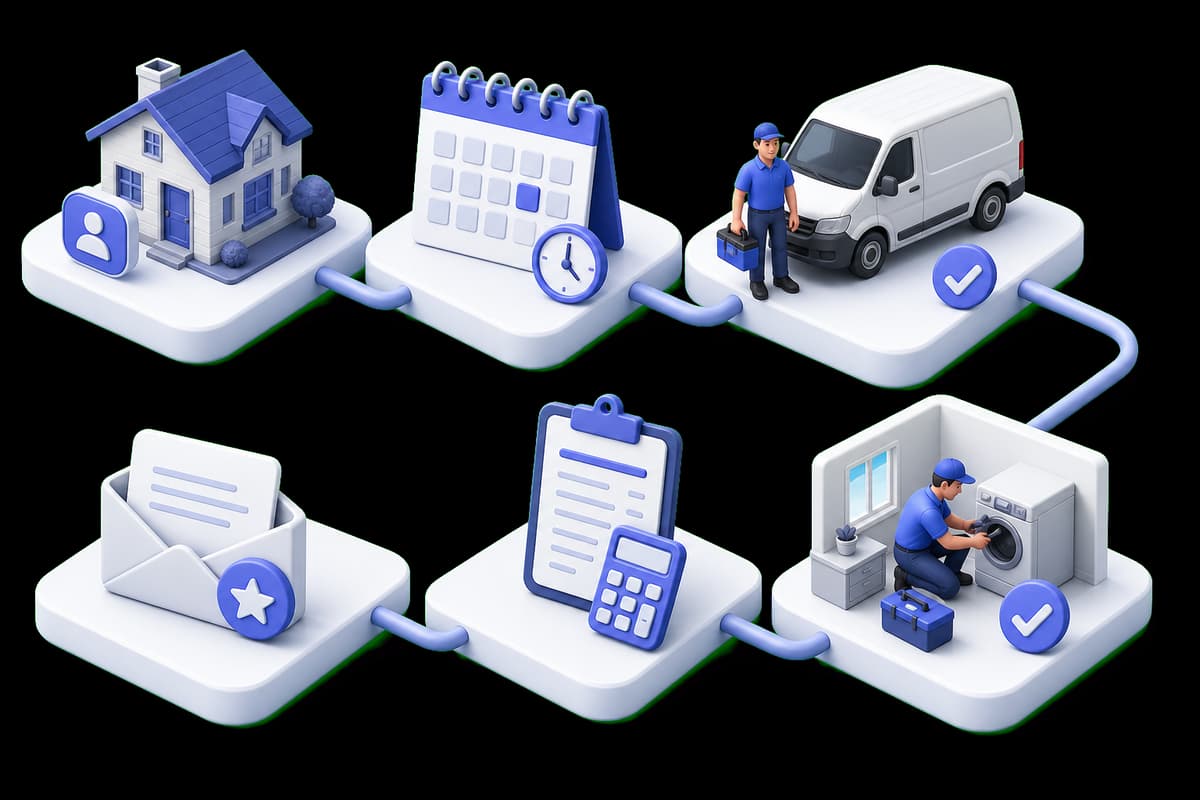
Request Reviews After Completed Service
A clear review process can follow completed jobs, installations, maintenance visits, or other eligible services. Requests should remain neutral and should not depend on whether the customer accepted an upsell or is expected to leave a positive rating.
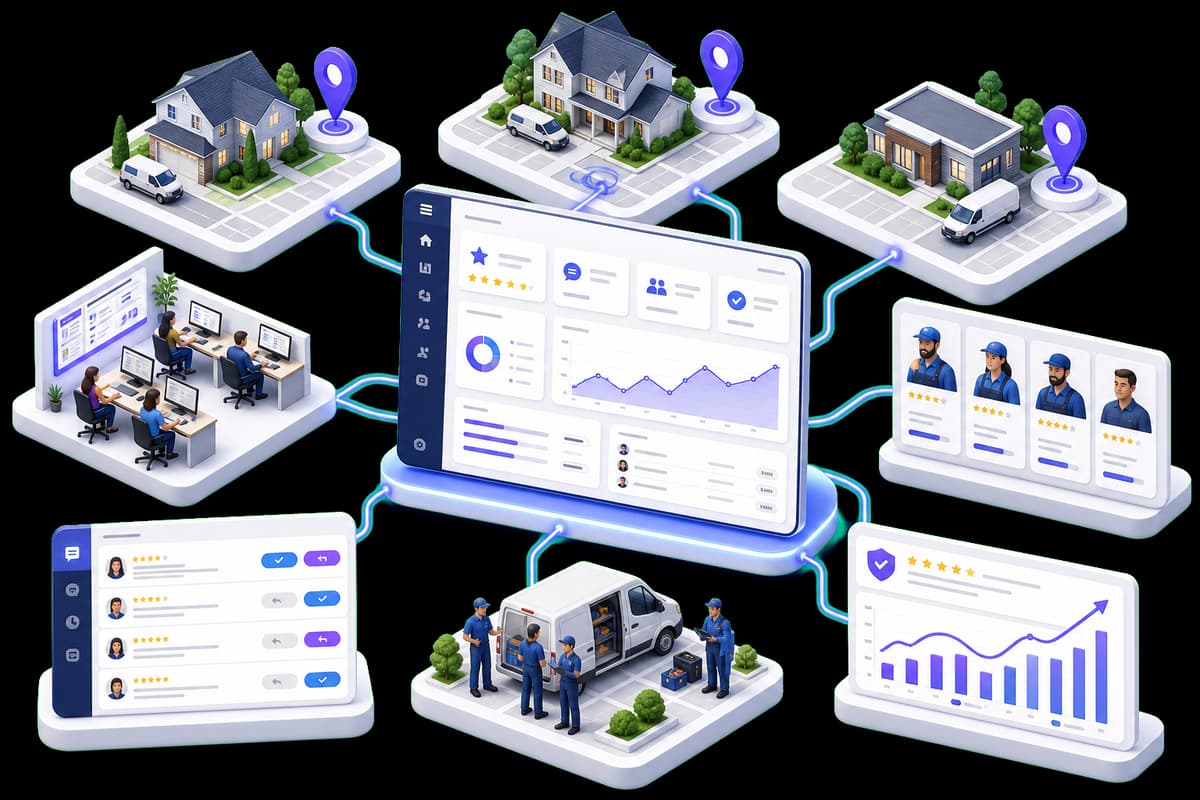
Keep Local Business Information Accurate
Home service companies should represent offices and service areas accurately, follow platform eligibility rules, and avoid creating misleading location pages or duplicate profiles. Clear ownership helps teams respond quickly and consistently.
Why Home Services Face a Higher Trust Threshold Than Most Industries
Customers hiring a contractor, plumber, electrician, or cleaner are making a decision that goes beyond a product purchase or a restaurant reservation. They are deciding whether to allow an unknown person or team into their home—sometimes while they are at work, sometimes with their family present. This access decision creates a trust threshold that reviews play a direct role in clearing.
What customers are actually evaluating in home service reviews
When a homeowner reads reviews before booking a plumber or HVAC company, they are not primarily evaluating technical quality—they have no reliable way to assess that before the job. What they are evaluating is a set of proxy signals for trustworthiness: did the crew arrive on time, did they call ahead when running late, did they explain the problem before starting work, did they clean up after the job, and did they charge what they quoted? Reviews that address these specifics are far more persuasive than reviews that say the work was done well. A review that says 'the technician showed up in a marked van, explained everything clearly, wore shoe covers, and left the space cleaner than they found it' is directly answering the question a prospective customer is asking before they book.
How negative reviews about on-site behaviour cost more than positive reviews earn
For home service businesses, a single detailed negative review describing a technician who was rude, damaged property, or failed to show up for an appointment can suppress conversion rates significantly—often more than five positive reviews can recover. Prospective customers in this category are actively scanning for red flags rather than just counting stars. This asymmetry means that review response quality matters as much as review volume. A company that responds to every critical review professionally, acknowledges what went wrong, and explains how it was resolved demonstrates the kind of operational accountability that prospective customers are looking for before they open their door.
How Google Reviews Affect Local Services Ads Performance
For home service businesses that run or plan to run Google Local Services Ads (LSA), reviews are not just a reputation signal—they are a direct performance factor that affects whether and how prominently the business appears in the LSA placement above standard search results.
The role of Google Reviews in LSA eligibility and ranking
Google Local Services Ads are available to businesses in categories including HVAC, plumbing, electrical, cleaning, landscaping, roofing, pest control, and other home trades depending on the market. To maintain an active LSA listing, businesses typically need a minimum number of Google reviews and a minimum average rating—requirements that Google adjusts by category and geography. Within the LSA auction, review count and rating are among the ranking factors that determine whether a business appears and in what position. A business with 80 reviews at 4.7 will generally outperform a competitor with 15 reviews at 4.9 in the LSA placement, because review volume signals more evidence of established activity.
Review volume benchmarks by service category
Home service businesses vary significantly in transaction volume, which creates different realistic review targets by trade. A residential cleaning company completing 30 or more appointments per week can reasonably expect 5 to 10 new Google reviews monthly with a consistent post-job invitation process. A general contractor completing 3 to 5 larger projects per month might realistically generate 2 to 4 reviews in that period. Setting volume targets that match actual job frequency—rather than benchmarking against high-transaction competitors—produces a more sustainable review strategy. The most effective approach ties the review invitation to the post-job invoice or completion message, delivered within 24 hours while the experience is fresh.
Home Services Review Management Questions
Answers about local Google reviews, post-job requests, service areas, complaints, photos, and multiple teams.
Customers often compare reviews before allowing a contractor or technician into their home. Feedback can provide context about reliability, communication, workmanship, cleanliness, scheduling, and issue resolution.
Incentives tied to positive sentiment can mislead customers and violate platform or advertising rules. Any feedback process should avoid conditioning a benefit on a specific rating.
Platform features vary. Businesses should avoid reposting customer or property photos without permission and should ensure that their own images accurately represent completed work.
A request can follow completed work, an installation, or a maintenance visit. It should be neutral, use consistent criteria, and never require a positive rating.
Acknowledge the concern, avoid arguing about job details publicly, provide a direct contact route, and review the estimate, scope, photos, and service records privately.
Follow Google’s eligibility and address-display requirements, use accurate service areas, avoid duplicate profiles, and maintain consistent business names, categories, phone numbers, and hours.
Learn More About Reviews for Home Services
Guides on Google Reviews, local search rankings, and review campaigns for contractors, plumbers, and home service businesses.



Explore More Local Reputation Solutions
Discover review strategies for other businesses that depend on local customer trust.
E-commerce
Build buyer confidence with a stronger public review presence for your online store.
Explore IndustrySaaS Companies
Support software evaluation and sales with credible review signals across the customer journey.
Explore IndustryDigital Agencies
Turn client feedback into visible proof of service quality, reliability, and expertise.
Explore IndustryFinancial Services
Strengthen customer confidence with transparent reputation management for financial brands.
Explore Industry
Build More Trust Across Your Service Area
Explore the Google Reviews service or discuss a strategy for your locations, teams, and local markets.