
Review Solutions for Financial Services
Support customer confidence with a transparent review strategy built for high-consideration decisions, sensitive service experiences, and regulated communications.
Buy Trustpilot Reviews
Choose a structured Trustpilot review campaign with transparent pricing, gradual delivery, and clear progress tracking.
View Service- Coming soon
Buy Google Reviews
Explore structured Google review campaign options for your business with clear expectations, gradual delivery, and transparent support.
View Service - Coming soon
Buy Google Play Reviews
Explore Google Play app review and rating campaigns with gradual delivery, clear tracking, and support for Android publishers.
View Service - Coming soon
Buy Yelp Reviews
Explore Yelp review campaigns for your business with gradual delivery, clear tracking, and transparent support.
View Service



Provide Context Before Customers Choose a Provider
Customers researching payment services, lenders, insurers, brokers, or fintech products often look for evidence about communication, support, account access, fees, and issue resolution. Public reviews can help them understand the service experience, but should never replace formal disclosures.
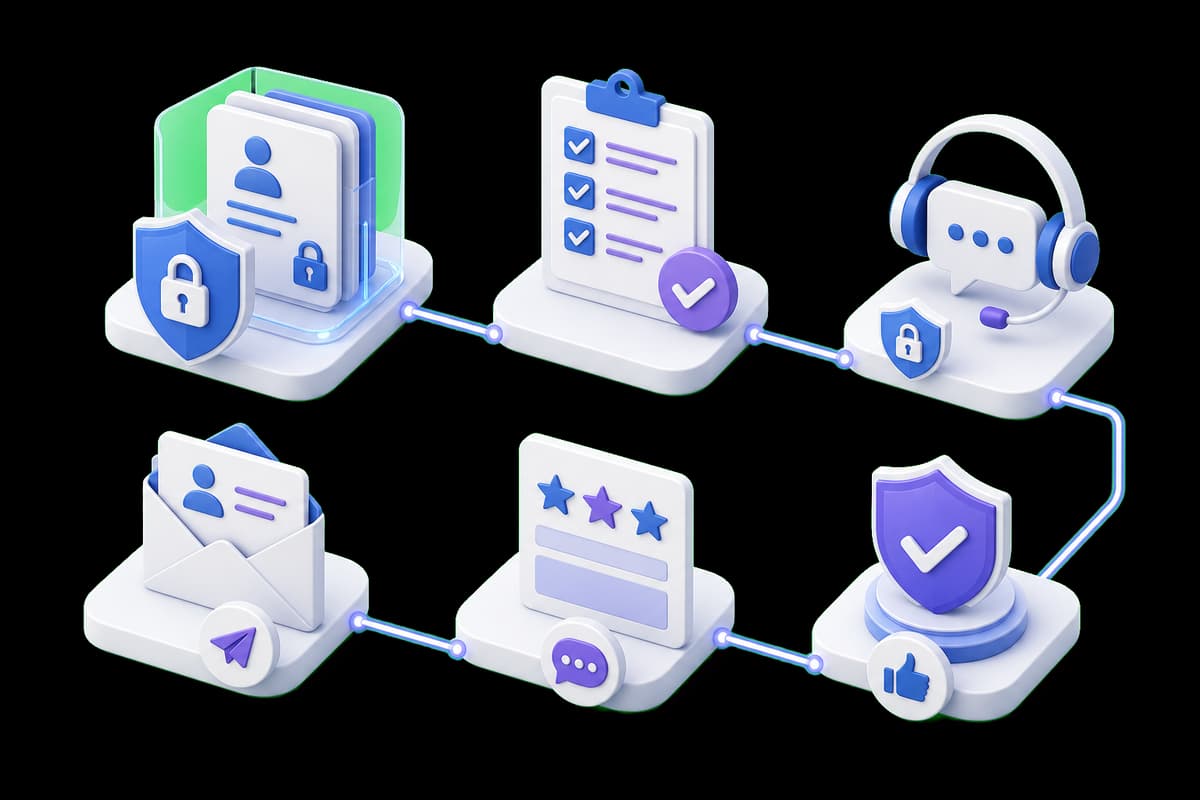
Design Feedback Workflows Around Privacy and Compliance
Financial businesses should align review invitations and responses with applicable regulations, internal compliance policies, privacy requirements, and platform rules. Public replies must avoid exposing account details or implying guaranteed financial outcomes.

Turn Recurring Feedback Into Operational Insight
Themes involving verification, payments, withdrawals, claims, fees, or response times can reveal where customer expectations and operational processes diverge. Monitoring those themes can support clearer communication and service improvement.
How Financial Advertising Rules Affect What Firms Can Do With Reviews
Financial services firms operate under advertising and testimonial regulations that restrict how reviews can be requested, republished, and promoted. These rules differ by jurisdiction and product type, and they affect firms even when the review was left voluntarily by a client.
FCA, SEC, and FINRA: what the rules restrict
In the United Kingdom, the Financial Conduct Authority's financial promotion rules require that all marketing communications, including the republication of customer testimonials, are fair, clear, and not misleading. A testimonial that references past investment returns without the required risk disclaimer, or that implies a typical outcome that is not representative of the majority of clients, can constitute a non-compliant financial promotion. In the United States, SEC Rule 206(4)-1 under the Investment Advisers Act governs how investment advisers can use testimonials and endorsements, including review content. FINRA has separate rules for broker-dealers that restrict the use of customer testimonials in advertising without specific disclosures. These rules do not prohibit firms from asking clients to leave reviews, but they do restrict how the resulting reviews can be used in promotional materials, websites, and social media.
What firms can do within regulatory constraints
Financial services firms can build a legitimate public review presence by focusing on what the rules permit: inviting eligible clients to leave honest feedback on third-party platforms such as Trustpilot, Google, or Feefo, without pre-screening or coaching; monitoring those reviews to identify service themes that should be escalated; and responding to reviews in ways that do not disclose account information or make promotional claims. When promoting the firm's Trustpilot rating in advertising or on the firm's website, firms should consult their compliance team about whether the TrustScore or star rating requires accompanying disclosures under applicable rules. Most regulators look more favourably on third-party review scores with transparent sourcing than on unverifiable client quotations embedded in marketing materials—because the third-party platform provides an independent verification layer.
Why Trustpilot Verification Labels Carry Extra Weight in Financial Services
Customers choosing a financial provider are making a high-stakes, high-anxiety decision. The signals they use to assess trustworthiness differ from other categories, and the Trustpilot verification framework plays a specific role in that assessment.
What customers look for when researching a financial provider
Customers evaluating a payment service, lender, insurer, or investment platform are looking for evidence that the provider will not defraud them, will handle their money securely, and will resolve problems if something goes wrong. These concerns are different from what restaurant or hotel customers look for. The review signals that carry most weight in financial services are: recent reviews from verified customers (not anonymous or unverifiable accounts), patterns of management responses showing the firm actively monitors and addresses complaints, and the absence of clusters of reviews describing the same type of problem—such as repeated withdrawal issues, account freezes, or hidden fees. A financial firm's Trustpilot profile where management responds to every critical review within 24 hours signals more trustworthiness than a profile with a higher average rating but no responses.
How the Trustpilot Verified label affects credibility in financial contexts
Trustpilot's verified review label—indicating that the review was invited by the business following a genuine transaction—carries particular credibility in financial services because customers in this category are highly aware of the possibility of fake or manipulated reviews. A financial product that appears to have many unverified reviews, or where a sudden influx of positive reviews appeared in a short period, will raise suspicion rather than build confidence. Firms that build their Trustpilot profile through a consistent, invitation-based process using the Trustpilot Business platform generate a higher proportion of verified reviews—which is both a credibility signal and a compliance-friendly approach, since it demonstrates that the feedback comes from real customers rather than anonymous submissions.
Financial Services Review Management Questions
Answers about compliance, privacy, customer invitations, public responses, and platform selection.
Customers often research trust, support quality, communication, fees, and issue resolution before choosing a financial provider. Reviews can add service context, but they do not replace licenses, disclosures, or independent due diligence.
Do not confirm account relationships or discuss transactions publicly. Use a general response, explain how the customer can contact a secure support channel, and follow internal identity-verification procedures.
The answer depends on the product, customer market, and geography. Trustpilot is commonly used for company-level research, but regulatory registers and specialist comparison sources may also be important.
They may be able to, but the process should be reviewed against applicable laws, regulator guidance, internal compliance requirements, and the review platform’s policies.
Businesses should not encourage misleading, unverified, or guaranteed performance claims. Any financial statement must comply with applicable advertising and disclosure requirements.
Acknowledge the concern without exposing private information, explain the correct complaint or support route, and ensure the case is handled through the organization’s approved process.
Learn More About Reviews for Financial Services
Guides on Trustpilot legitimacy, campaign compliance, and review strategy for regulated financial businesses.



Explore More Reputation Solutions
Discover how other high-consideration businesses approach customer trust and public feedback.
E-commerce
Build buyer confidence with a stronger public review presence for your online store.
Explore IndustrySaaS Companies
Support software evaluation and sales with credible review signals across the customer journey.
Explore IndustryDigital Agencies
Turn client feedback into visible proof of service quality, reliability, and expertise.
Explore IndustryTravel & Booking Companies
Help travelers book with confidence by strengthening trust throughout the research journey.
Explore Industry
Plan a More Responsible Public Review Strategy
Discuss your market, compliance requirements, and company profile before choosing a campaign.