
Review Solutions for Travel & Booking Companies
Help travelers evaluate your business with feedback about booking, communication, service delivery, support, and the complete customer journey.
Buy Trustpilot Reviews
Choose a structured Trustpilot review campaign with transparent pricing, gradual delivery, and clear progress tracking.
View Service- Coming soon
Buy Google Reviews
Explore structured Google review campaign options for your business with clear expectations, gradual delivery, and transparent support.
View Service - Coming soon
Buy Google Play Reviews
Explore Google Play app review and rating campaigns with gradual delivery, clear tracking, and support for Android publishers.
View Service - Coming soon
Buy Yelp Reviews
Explore Yelp review campaigns for your business with gradual delivery, clear tracking, and transparent support.
View Service


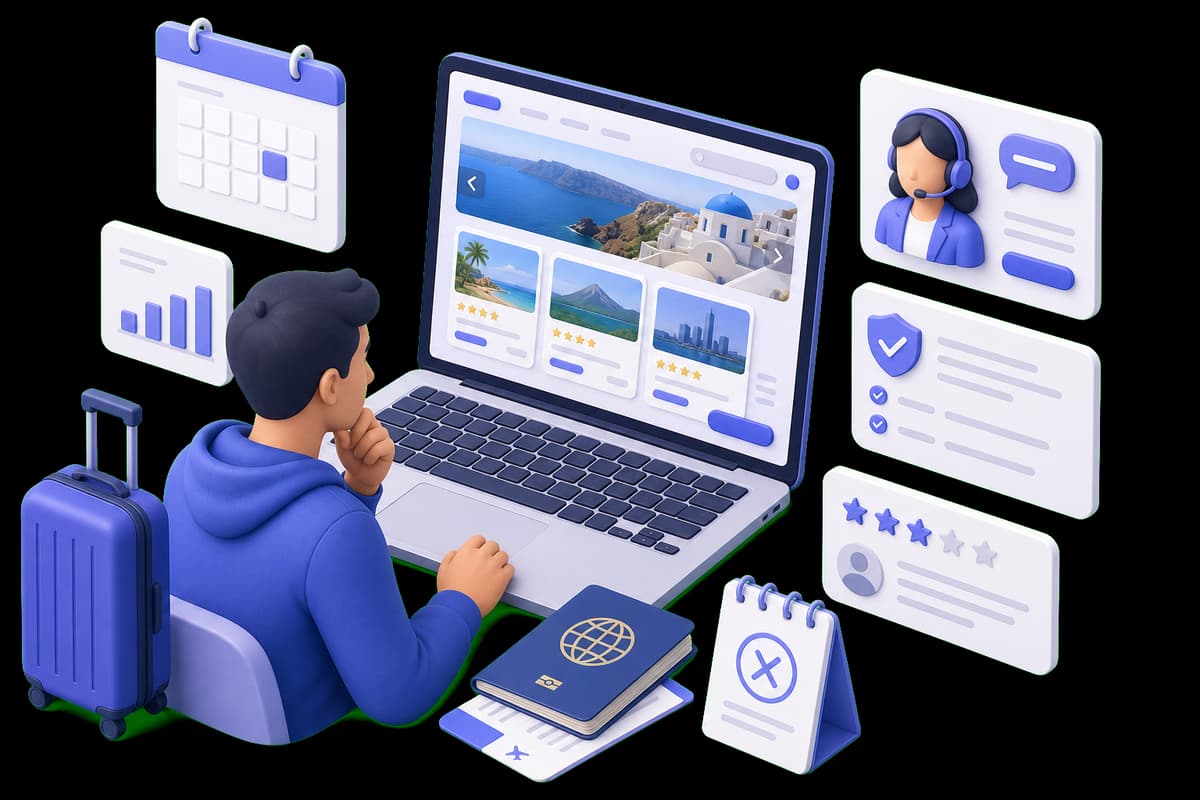
Build Confidence Before a Customer Books
Travel purchases can involve significant cost, fixed dates, and uncertainty about what happens if plans change. Reviews can provide useful context about booking clarity, communication, support, refunds, and the experience delivered by the company.

Request Reviews at the Right Point in the Journey
The appropriate invitation moment depends on the service. A booking platform may request feedback after support or completed travel, while a tour operator may wait until the activity ends. Invitations should clearly identify the experience being reviewed.
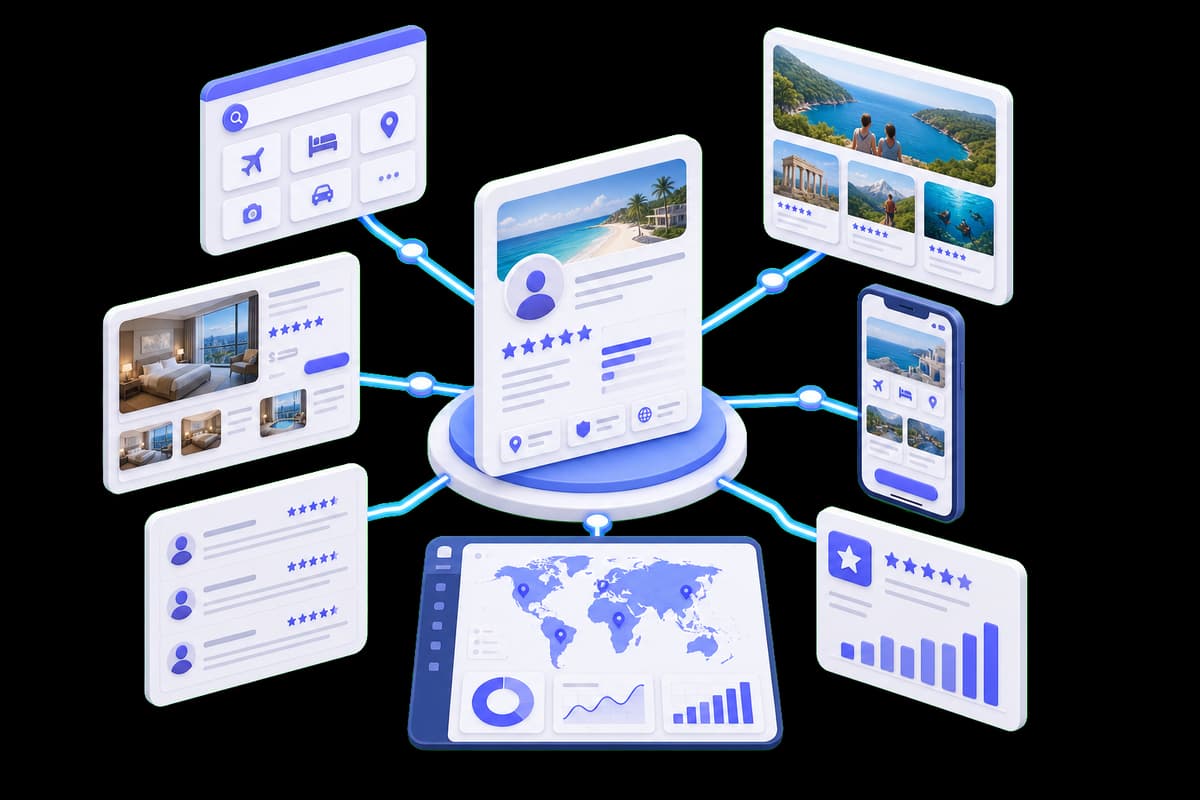
Choose Platforms That Fit Your Travel Offer
Trustpilot can support company-level research, while Google, Tripadvisor, app stores, and specialist marketplaces may influence other stages of the journey. Focus on profiles customers actually use when evaluating your type of service.
Why the Post-Trip Review Window Is Narrow—and How to Capture It
Travel reviews have a shorter high-quality capture window than almost any other industry. The emotional context that produces specific, detailed, and enthusiastic reviews fades quickly after a trip ends—and once it fades, the review a traveler leaves is either less detailed or never written at all.
What happens to review motivation after a trip
Travelers are most motivated to share their experience in the 48 to 96 hours immediately after returning from a trip. During this period, the memories are vivid, the emotional investment in the experience is fresh, and the traveler is typically re-engaging with their normal routine in a way that makes them receptive to a brief review request. After this window closes, the competing demands of daily life displace the motivation to write a review—even if the trip was excellent. Research on review submission timing shows a sharp drop-off in review rate after 72 hours post-return, with a further significant decline after one week. Travel companies that send review invitations 5 to 7 days after return—a common default—are already past the peak window for most travelers. The review invitation should be queued to arrive within 24 to 48 hours of the traveler's expected return date, not the departure date or the booking confirmation.
Separating booking experience reviews from trip experience reviews
Travel companies serve two distinct customer moments that produce very different types of reviews: the booking and support experience, and the trip or experience itself. These should be treated as separate review opportunities with separate invitation timings. A traveler who had a seamless booking process and excellent pre-trip support can be invited to review that experience immediately—before the trip takes place. A traveler who completed a tour, cruise, or package holiday should be invited to review the actual travel experience within 48 hours of return. Conflating these moments—sending one generic 'how was your experience?' invitation after the trip—produces reviews that mix service quality with travel experience quality in a way that is difficult for prospective customers to interpret. Structured review invitations that specify which aspect of the service is being reviewed produce more specific, more useful, and more conversion-effective content.
Why Travel Complaints Spread Further Than Complaints in Any Other Industry
Travel complaints are disproportionately viral compared to complaints in other sectors. Understanding why this happens—and what review management approaches reduce the risk of amplification—is essential for any travel company that relies on public trust.
The emotional stakes that make travel complaints different
A traveler who has a bad restaurant experience is disappointed. A traveler whose package holiday is significantly different from what was advertised—wrong hotel, lower room standard, missing excursions, poor communication during a problem—has had a significant financial and emotional disappointment during a limited annual event. Holidays are planned months in advance, involve substantial sums relative to household income, and carry a high expectation of enjoyment. When something goes wrong, the emotional response is proportional to how much the traveler invested—not just financially, but in anticipation. This produces reviews that are written with significantly more detail, more emotion, and more shareable content than reviews in most other categories. A travel company that appears at the top of TripAdvisor's complaint category or accumulates one-star Trustpilot reviews from cancelled tours will find those reviews surfacing prominently in search results for its brand name—often above its own website.
The cancellation and refund response that most determines public reputation
Travel companies are particularly exposed to concentrated review damage during disruptions: pandemic-era cancellations, airline strikes, extreme weather, or supplier failures. How a company communicates and processes refunds during a disruption creates more review activity—positive or negative—than any normal operating period. Companies that communicate proactively during disruptions, offer clear refund timelines, and follow through on those commitments typically generate positive reviews from travelers who recognise that the disruption was outside the company's control but that the company handled it well. Companies that go silent, require customers to chase refunds, or offer vouchers when cash refunds were expected generate the concentrated negative review clusters that can define a brand's public reputation for years. Review management during disruptions is primarily a customer communication and operations problem, not a marketing problem.
Travel Review Management Questions
Answers about review timing, platform selection, cancellations, multi-location businesses, and customer responses.
Travelers often commit money and fixed dates before receiving the service. Reviews can provide additional context about booking, communication, reliability, support, and how problems are handled.
Trustpilot is useful for company-level research, while Tripadvisor is strongly associated with destinations, accommodation, attractions, and travel experiences. The right mix depends on the service and audience.
Yes, but language, local expectations, brand structure, and the platforms used by each audience should guide the approach. Public profile information should remain consistent and accurate.
Timing should reflect the experience being reviewed. For a completed trip or activity, request feedback afterward. For booking or support feedback, clearly state that the request concerns that specific stage.
Acknowledge the concern, explain the applicable process without sharing private booking information, and direct the customer to a channel where the case can be reviewed securely.
No. Reviews may support confidence, but booking decisions also depend on price, availability, destination, policies, customer support, and the quality of the actual offer.
Learn More About Reviews for Travel Companies
Guides on Trustpilot, platform comparisons, and review strategy for travel agencies, booking platforms, and tour operators.

Explore More Customer-Trust Solutions
See how reviews support reputation in other high-consideration markets.
E-commerce
Build buyer confidence with a stronger public review presence for your online store.
Explore IndustrySaaS Companies
Support software evaluation and sales with credible review signals across the customer journey.
Explore IndustryDigital Agencies
Turn client feedback into visible proof of service quality, reliability, and expertise.
Explore IndustryFinancial Services
Strengthen customer confidence with transparent reputation management for financial brands.
Explore Industry
Help More Travelers Book With Confidence
Explore Trustpilot campaign options for your travel, booking, or experience business.