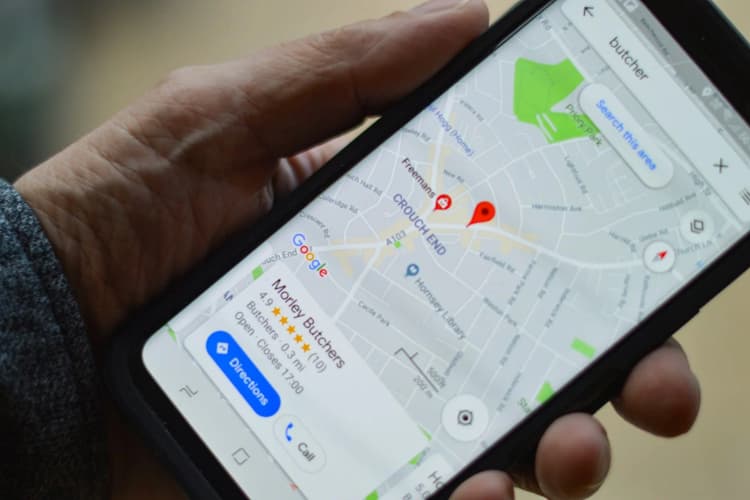

Customer reviews are one of the most influential and controllable signals in local search. Google confirms that reviews are a factor in local ranking—but the relationship between reviews and visibility is more nuanced than simply "more reviews equals higher ranking."
This guide explains how Google's local ranking system works, which review attributes actually matter and why, and what businesses can do to build review signals that support long-term local visibility.
For businesses exploring a structured Google review campaign with gradual delivery and dashboard tracking, compare current package options on the Buy Google Reviews service page.
How Google's local ranking system works
Google evaluates local business listings using three primary factors: relevance, distance, and prominence. Reviews contribute to at least two of these three—and indirectly influence the third.
Relevance
Relevance describes how well a business listing matches what a searcher is looking for. Google uses the text content of your Business Profile—your business name, category, service areas, attributes, and the text of customer reviews—to assess relevance for a given query.
When customers mention specific services, outcomes, locations, or product names in their reviews, that content gives Google's systems more text evidence that your business is relevant to those queries. A dental practice with reviews that mention "tooth whitening in Austin" has stronger relevance signals for that specific query than one whose reviews only say "great experience!"
Relevance is also shaped by your selected primary category, service areas, and the accuracy of your Business Profile overall. Reviews reinforce or expand on the relevance signals your profile already contains—they do not replace the need for an accurate, complete listing.
Distance
Distance describes how close the business is to the searcher's location, or to the location specified in the query. This is largely outside a business's control, though defining accurate service areas helps Google understand the geographic scope of the business.
Reviews do not directly change distance signals, but a stronger overall prominence score can help a business appear for searches in slightly wider geographic areas than its strict physical proximity would otherwise support.
Prominence
Prominence describes how well-known or established a business is—both online and offline. This is where reviews have their most direct and measurable influence.
Google has confirmed that review count and score can factor into local ranking through their effect on prominence. Google's documentation states: "Google review count and score are factored into local search ranking. More reviews and positive ratings can improve your business's local ranking."
Prominence is also influenced by:
- Links to the business website from other sites
- References to the business across the web
- The completeness and authority of the Business Profile
- Owner responses to reviews
- Photos and Business Profile activity
Reviews are one of the most actionable prominence inputs because businesses can directly influence how many reviews they receive, the consistency of new reviews over time, and the quality of their responses.
The four review factors that influence local ranking
1. Review volume
Total review count contributes to prominence. A business with 200 reviews generally signals more established activity than one with 5 reviews, even if the rating is identical. However, raw count is less important than it appears if most reviews are old.
Google's systems assess the recency distribution of reviews alongside the total. A business that received 180 reviews over three years and has received 20 in the last 90 days appears more actively used than one that received all 200 reviews two years ago with no new activity since.
What to focus on: Consistent, ongoing review acquisition from genuine customers rather than one-time bursts. A steady pace of 3–5 new reviews per month over a full year is typically more valuable for local ranking than 40 reviews received in a single campaign followed by months of silence.
2. Review rating
Average rating is part of the prominence calculation. A substantially higher rating between two otherwise comparable businesses can influence which appears more prominently in the local pack.
However, the relationship between rating and ranking is not linear or isolated. A business with a 4.7 average and active, recent reviews consistently outperforms a business with a 5.0 average and no recent activity. A believable rating distribution—with a realistic spread of 4- and 5-star reviews and some occasional lower ratings—can also appear more credible to both Google's systems and prospective customers than a perfect 5.0 average with only a handful of reviews.
What to focus on: Maintaining a strong average rating (4.5+) through genuine customer experience rather than aggressively removing or diluting lower ratings. A consistent rating is more useful long-term than a managed one.
3. Review velocity
Velocity describes how frequently new reviews arrive. This is arguably the most underappreciated review factor in local SEO, and also one of the most controllable.
Consistent review velocity signals to Google that a business is actively serving customers. This is particularly important in competitive local categories where many businesses have similar total review counts. A business receiving 6 new reviews per month is demonstrably more active than one with the same total count but no new reviews in 90 days.
Review velocity also contributes to freshness—a factor that Google has indicated matters for local search because searchers want to see current information about an actively operating business.
What to focus on: Build a repeatable post-purchase or post-service review request workflow rather than relying on occasional campaigns. The goal is consistent monthly activity, not quarterly spikes.
4. Review content and keyword signals
The text content of customer reviews provides Google with relevance signals beyond what appears in your Business Profile fields. When reviews mention specific services, locations, product types, or outcomes, this expands the topical and geographic relevance signals available to Google's NLP systems.
Examples of review content that carries relevance signal:
- Mentions of specific service names ("the HVAC repair was done same day")
- Location references ("came out to our property in Westlake")
- Specific outcomes ("they fixed the leak in under two hours")
- Product names or attributes ("the vegetarian menu had great options")
This does not mean businesses should coach customers to include specific keywords. Google's guidelines explicitly prohibit businesses from providing keywords or specific phrases for customers to include in reviews. Asking for keyword-stuffed feedback also creates reviews that sound unnatural to prospective customers and can trigger review quality filters.
What to focus on: Ask genuine customers about the specific service or product they received, and invite them to share their experience. Specific, natural language will appear organically when the review invitation is tied to a particular interaction rather than asking for a generic "please leave us a review."
How owner responses affect local ranking
Google has confirmed that responses to reviews are a signal it considers. When a business responds to reviews, it demonstrates active management of the Business Profile—a positive prominence signal.
The practical effect of responses on ranking is difficult to isolate, but the broader impact is clear: review response rates and quality are factored into how Google evaluates Business Profile engagement. A profile with responses on 90% of reviews, including critical ones, shows substantially more active management than one with responses on 20%.
More directly for customers: Google's research and third-party studies consistently show that prospective customers read business responses to reviews. A professional, specific response to a critical review influences trust more than ignoring it.
What to focus on:
- Respond within 48 hours to all new reviews
- Thank positive reviewers with a sentence that references the specific service or product they mentioned
- Address critical reviews professionally without being defensive, and describe the action taken or offered
- Do not include marketing language, keywords, or promotional content in responses
How star rating affects click-through rate—which affects ranking
There is a secondary mechanism through which reviews affect local ranking: their influence on click-through rate (CTR). Higher-rated listings in the local pack consistently receive higher CTR from search results. Google's systems interpret higher CTR as a signal of relevance and user satisfaction—and CTR feeds back into how Google ranks results.
A business with a 4.8 star average and a well-written review snippet will attract more clicks from the local pack than a competitor at 4.2 with fewer reviews, even if both are ranked at similar prominence. More clicks reinforce the ranking, creating a compounding effect over time.
This feedback loop means that improving review quality—not just quantity—has an indirect but real ranking effect through behavioral signals.
Cross-platform reviews and local SEO
Google Reviews displayed on your Business Profile are the primary review input for local ranking. Reviews on Yelp, Trustpilot, or other platforms do not directly feed into Google's local ranking algorithm.
However, cross-platform reviews contribute to broader prominence signals:
- Third-party review sites that rank in organic search for your business name add to brand prominence
- Review content on platforms indexed by Google can reinforce topical and geographic relevance signals
- A stronger overall online reputation—across platforms—correlates with higher brand search volume and CTR, both of which can indirectly support local ranking
For businesses that receive reviews across multiple platforms, managing each platform's review profile consistently is good practice—even if only Google Reviews directly influence local pack ranking.
Business type considerations
The relative importance of review factors varies by business category.
High-consideration services (legal, medical, financial, home services)
For businesses where customers research extensively before choosing, review quality and volume matter significantly. Customers in these categories read multiple reviews before making a decision, so total review count and rating distribution both influence CTR and trust. Response quality is particularly important: a thoughtful response to a critical review can prevent that review from deterring a prospective patient or client.
Priority: Volume, rating consistency, and response quality. Aim for 30+ reviews with a 4.5+ average and responses on all critical reviews.
Restaurants and hospitality
Freshness is especially important because customers checking current dining options want recent feedback. Review velocity matters more here than in other categories. A restaurant that received 200 reviews two years ago but has no new reviews in 3 months appears potentially closed or quality-declined to both Google and searchers.
Priority: Consistent velocity (weekly new reviews), photo activity, and specific service mentions (dish names, atmosphere, staff interactions).
Retail stores
Rating and review count are the primary signals for retail, where customers often make rapid comparison decisions on the search results page without reading individual reviews. CTR from the local pack is strongly influenced by star rating and visual prominence.
Priority: Maintaining a 4.5+ average, responding to all low-rating reviews promptly, and encouraging brief reviews after purchase.
Multi-location businesses
Each location needs its own review profile and strategy. A strong head-office profile does not improve ranking for satellite locations. Each Business Profile needs its own review velocity, rating management, and response process.
Priority: Location-level review strategy rather than centralised management. Assign review response ownership at the location level.
Practical review strategy for local businesses
Build a consistent post-service request workflow
The most reliable way to build review velocity is to make review requests a standard part of the post-service process:
- After a completed appointment, delivery, job, or purchase, send a review invitation within 24–48 hours
- Use a direct Google review link (available from your Business Profile dashboard) to reduce friction
- Keep the message short, neutral, and tied to the specific interaction ("Thanks for visiting us today—if you have a moment, we'd appreciate hearing about your experience")
- Do not attach any reward or condition to leaving a review
Identify your highest-volume customer touchpoints
Not every customer interaction is equally likely to generate a review. Identify the 2–3 touchpoints in your customer journey where people are most satisfied and most likely to share feedback, and focus your invitation process there. Common touchpoints include:
- Service completion or project delivery
- Post-appointment email follow-up
- Order delivery confirmation
- Support case resolution with a positive outcome
- Loyalty program milestone
Ask after specific services, not generically
Invitations tied to a specific service ("thanks for booking our window cleaning service") generate more specific, useful reviews than generic "how was your experience?" prompts. Specific invitations also naturally produce review content with service mentions—which improves relevance signals without coaching customers to include keywords.
Respond consistently, not selectively
Many businesses respond to 5-star reviews and ignore 3-star or 2-star reviews. This approach misses the most important response opportunity. A professional response to a critical review—one that acknowledges the issue, provides context, and describes the resolution—does more for prospective customers' trust than a thank-you on a glowing review.
Set a target of responding to all new reviews within 48 hours, prioritising critical reviews first.
Monitor and maintain profile accuracy
Review signals only compound if the underlying Business Profile is accurate and complete:
- Business name, address, and phone number (NAP) should be consistent across the web
- Primary category should accurately reflect the core business type
- Service areas should be defined and current
- Photos should be recent and representative
- Opening hours should reflect actual availability, including holiday hours
An outstanding review profile cannot compensate for an inaccurate or incomplete Business Profile.
Measurement framework
Track these signals monthly to evaluate the effectiveness of your local review strategy:
| Signal | What to measure | Target |
|---|---|---|
| Review velocity | New reviews per month | Consistent positive trend |
| Average rating | 30-day and 90-day rolling average | ≥ 4.5 |
| Response rate | % of reviews with a response | ≥ 90% |
| Response time | Average hours to first response | ≤ 48 hours |
| Review content quality | % mentioning specific services | Increasing over time |
| Local pack impressions | From GBP Insights | Month-over-month growth |
| Local pack CTR | From GBP Insights | Above local category average |
| Profile photo views | From GBP Insights | Consistent |
These signals should be reviewed alongside Google Business Profile Insights and Google Search Console data for local landing pages.
What reviews cannot do for local ranking
It is equally important to understand where reviews have no direct effect:
Reviews do not override distance. A business significantly farther from a searcher than its competitors will not overcome that distance disadvantage through review volume or rating alone.
Reviews do not compensate for category mismatch. If the primary category is incorrect, review signals are less useful because Google struggles to match the listing to relevant queries.
Reviews do not replace technical local SEO. Structured data markup, NAP consistency across directories, website mobile performance, and accurate location pages all contribute to local ranking and cannot be replaced by review activity.
Reviews do not guarantee local pack placement. Appearing in the three-position local pack is competitive and context-dependent. Reviews improve the probability of appearing—and appearing higher—but cannot guarantee placement for any specific query.
Frequently asked questions
How many Google reviews do I need to rank locally?
There is no universal minimum. In low-competition local categories, 20–30 reviews may be sufficient to rank in the top 3. In highly competitive categories in major cities, businesses may need 100+ reviews. The more accurate question is whether your review count is competitive relative to the businesses currently appearing in the local pack for your target queries. Check what the top 3 results have before setting a volume target.
Do negative reviews hurt local ranking?
A single negative review in an otherwise strong review profile has minimal impact on ranking. A trend of negative reviews that drops your average below 4.0 can reduce local pack visibility because both your rating signal and your CTR will decline. The most effective response to a negative review is a professional, prompt response that addresses the specific concern.
Do Yelp or Trustpilot reviews help Google ranking?
Not directly. Only Google Reviews displayed on your Business Profile are confirmed as a direct input into Google's local ranking algorithm. Yelp and Trustpilot reviews may contribute to broader online prominence signals if they rank in organic search for your brand, but they do not replace the need for a strong Google Reviews profile.
Does responding to reviews help ranking?
Google has confirmed that responses signal active Business Profile management, which is a positive engagement signal. The more direct benefit is to CTR: responding to reviews—especially critical ones—has been shown to improve how prospective customers evaluate businesses, which increases local pack CTR and the downstream ranking benefit that produces.
How quickly do new reviews affect local ranking?
Review velocity effects are not immediate, but usually observable within 4–8 weeks. A sustained improvement in monthly review rate over 3–6 months produces measurable changes in local prominence and map pack appearance frequency. Sudden large spikes in review activity are less effective than gradual, consistent improvement.
Can I ask customers to mention specific keywords in reviews?
No. Google's guidelines prohibit businesses from providing keywords, phrases, or scripts for customers to include in reviews. Customers should describe their experience in their own words. Specific, natural language will appear organically if review invitations are tied to specific services or visits rather than generic prompts.
Is it worth pursuing reviews on Google Maps specifically?
Your Business Profile listing appears in both Google Search (local pack) and Google Maps. Reviews contribute to prominence in both. There is no meaningful distinction between targeting Google Maps reviews and Google Search reviews—they are the same profile and the same review system.
Summary
Reviews improve local search rankings by contributing to prominence, relevance, and engagement—three of the most important factors in Google's local ranking algorithm. The specific attributes that matter most are review velocity (consistent new reviews over time), rating (maintained above 4.5), review content quality (specific, service-related language), and response engagement (professional replies to all reviews within 48 hours).
The most effective local review strategy is not a one-time campaign but a repeatable system: a neutral, post-service review invitation sent consistently to genuine customers, combined with professional response management and accurate Business Profile maintenance.
For a structured Google Business Profile review campaign with gradual delivery and tracking, see the Buy Google Reviews service page. For a broader overview of why Google reviews matter for local businesses, read Why Google Reviews Are Important for Local Businesses.
For industry-specific local review strategies, see guidance for restaurants, home service businesses, and real estate agencies.