
Review Solutions for Healthcare & Dental Clinics
Support patient confidence with accurate local profiles, responsible feedback processes, and public responses designed around privacy and professional standards.
Buy Trustpilot Reviews
Choose a structured Trustpilot review campaign with transparent pricing, gradual delivery, and clear progress tracking.
View Service- Coming soon
Buy Google Reviews
Explore structured Google review campaign options for your business with clear expectations, gradual delivery, and transparent support.
View Service - Coming soon
Buy Google Play Reviews
Explore Google Play app review and rating campaigns with gradual delivery, clear tracking, and support for Android publishers.
View Service - Coming soon
Buy Yelp Reviews
Explore Yelp review campaigns for your business with gradual delivery, clear tracking, and transparent support.
View Service


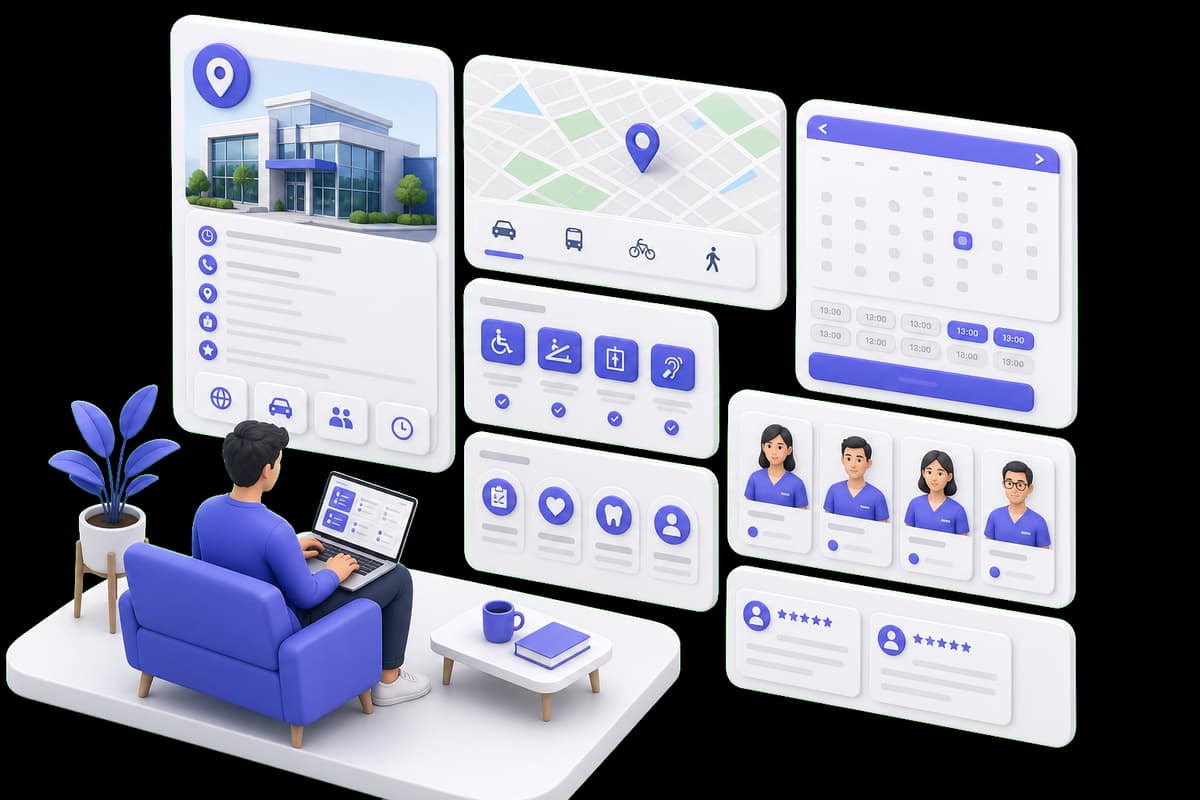
Provide Useful Context Before a Patient Contacts the Practice
Patients may compare location, accessibility, communication, appointment processes, staff interactions, and general service experience. Reviews can support that research, but they should not be treated as medical advice or proof of clinical outcomes.

Respond Without Confirming a Patient Relationship
A public response can create privacy risk even when the reviewer disclosed information first. Healthcare organizations should use approved language, avoid discussing care or records, and direct individual concerns to a secure patient channel.

Align Review Invitations With Professional Requirements
Practices should review applicable healthcare privacy rules, advertising standards, professional guidance, and platform policies before requesting feedback. Invitations must not pressure patients or imply preferential care.
The Privacy Dimension That Makes Healthcare Reviews Different
Healthcare organizations face a review management challenge that most other industries do not: the act of responding to a patient review can itself create a privacy violation, even when the patient disclosed their own information first. Understanding where the compliance boundary sits is essential before building any review response process.
What HIPAA, GDPR, and professional rules restrict in public responses
In the United States, HIPAA prohibits covered entities from disclosing protected health information in any public forum—including a response to a Google review. Acknowledging that the reviewer is a patient, referencing their appointment, or discussing any aspect of their care constitutes a potential HIPAA violation even if the patient disclosed that information first. GDPR imposes similar obligations on healthcare providers operating in the EU and UK. Beyond privacy law, most professional regulatory bodies in medicine and dentistry have specific advertising and testimonial standards that restrict how practices can reference outcomes or patient relationships publicly.
How to respond professionally without creating compliance risk
A compliant healthcare review response is necessarily more general than responses in other industries. The standard approach is to thank the reviewer for sharing feedback without confirming whether they are or were a patient, then invite them to contact the practice through a secure channel (a dedicated patient relations line or email) if they would like to discuss their experience further. This approach works for both positive and critical reviews and can be adapted into approved templates for each clinic location. Responses should be reviewed by a compliance or legal team before being published, particularly in cases involving criticism of clinical care or treatment outcomes.
How Patients Use Google Reviews to Choose a Practice
Google is the dominant channel through which patients discover, compare, and choose local healthcare providers. Understanding what patients look for in reviews—and what they do not—helps practices focus their review strategy on the content that actually drives appointments.
What prospective patients evaluate in healthcare reviews
Research consistently shows that patients use reviews to assess non-clinical aspects of a healthcare experience: how easy it is to book an appointment, how long they waited, how staff communicated, whether they felt listened to, and how the front desk handled billing or insurance questions. They are also looking for red flags—reviews that describe feeling dismissed, repeated cancellations, or billing disputes. Clinical outcomes are rarely discussed in reviews in a verifiable way, and patients generally understand this. What they can evaluate is the service experience around the clinical encounter, and that is what a review strategy should aim to capture.
Review volume and rating benchmarks for healthcare local search
In healthcare local search, a practice with 50 to 150 reviews and a 4.5 or higher average rating is generally competitive in most markets. Individual practitioner profiles, multi-specialty group practices, and hospital-affiliated outpatient clinics each have different competitive baselines depending on their category and geography. Practices with fewer than 20 reviews, or with average ratings below 4.0, are often filtered out of the Google local pack in competitive markets regardless of their actual clinical quality. Building a consistent review invitation workflow—tied to completed appointments and carried out in compliance with applicable rules—is the most reliable way to improve both volume and rating over time.
Healthcare Review Management Questions
Answers about patient privacy, review invitations, public responses, treatment claims, and multiple clinic locations.
Patients may use reviews to understand accessibility, communication, scheduling, staff interactions, and the general service experience. Reviews do not establish clinical quality or guarantee treatment outcomes.
Yes, but the response should not confirm that the reviewer is a patient or disclose care, appointment, billing, or record information. Use approved general language and a secure contact route.
Patients may describe their own experience, but providers should not encourage misleading or guaranteed outcome claims. Public responses should not discuss individual treatment details.
Possibly, but the process must comply with applicable privacy laws, professional rules, advertising requirements, and platform policies. Clinics should obtain appropriate legal or compliance guidance for their jurisdiction.
No. Selective invitations can distort feedback and may violate platform rules. Use consistent eligibility criteria that do not depend on expected sentiment.
Keep each location’s information accurate, define who monitors and responds, use privacy-approved templates, and escalate clinical or formal complaints through established internal processes.
Learn More About Reviews for Healthcare Businesses
Practical guides on Google Reviews, Yelp, and local search visibility for clinics, dentists, and healthcare providers.



Explore More Professional Reputation Solutions
See how other trust-sensitive organizations approach public feedback.
E-commerce
Build buyer confidence with a stronger public review presence for your online store.
Explore IndustrySaaS Companies
Support software evaluation and sales with credible review signals across the customer journey.
Explore IndustryDigital Agencies
Turn client feedback into visible proof of service quality, reliability, and expertise.
Explore IndustryFinancial Services
Strengthen customer confidence with transparent reputation management for financial brands.
Explore Industry
Plan a Privacy-Aware Review Strategy
Discuss your practice structure, locations, and compliance requirements with our team.