
Review Solutions for Law Firms
Strengthen trust during legal-service research with accurate profiles, responsible review invitations, and responses that protect client confidentiality.
Buy Trustpilot Reviews
Choose a structured Trustpilot review campaign with transparent pricing, gradual delivery, and clear progress tracking.
View Service- Coming soon
Buy Google Reviews
Explore structured Google review campaign options for your business with clear expectations, gradual delivery, and transparent support.
View Service - Coming soon
Buy Google Play Reviews
Explore Google Play app review and rating campaigns with gradual delivery, clear tracking, and support for Android publishers.
View Service - Coming soon
Buy Yelp Reviews
Explore Yelp review campaigns for your business with gradual delivery, clear tracking, and transparent support.
View Service



Help People Evaluate the Experience of Working With Your Firm
Prospective clients may look for evidence about responsiveness, clarity, professionalism, accessibility, and communication before making an inquiry. Reviews can provide service context without proving legal ability or predicting a case result.

Protect Client Information in Every Public Response
A law firm should not confirm representation, disclose privileged facts, or argue the substance of a legal matter in public. Responses should remain general and route individual concerns through an approved private channel.
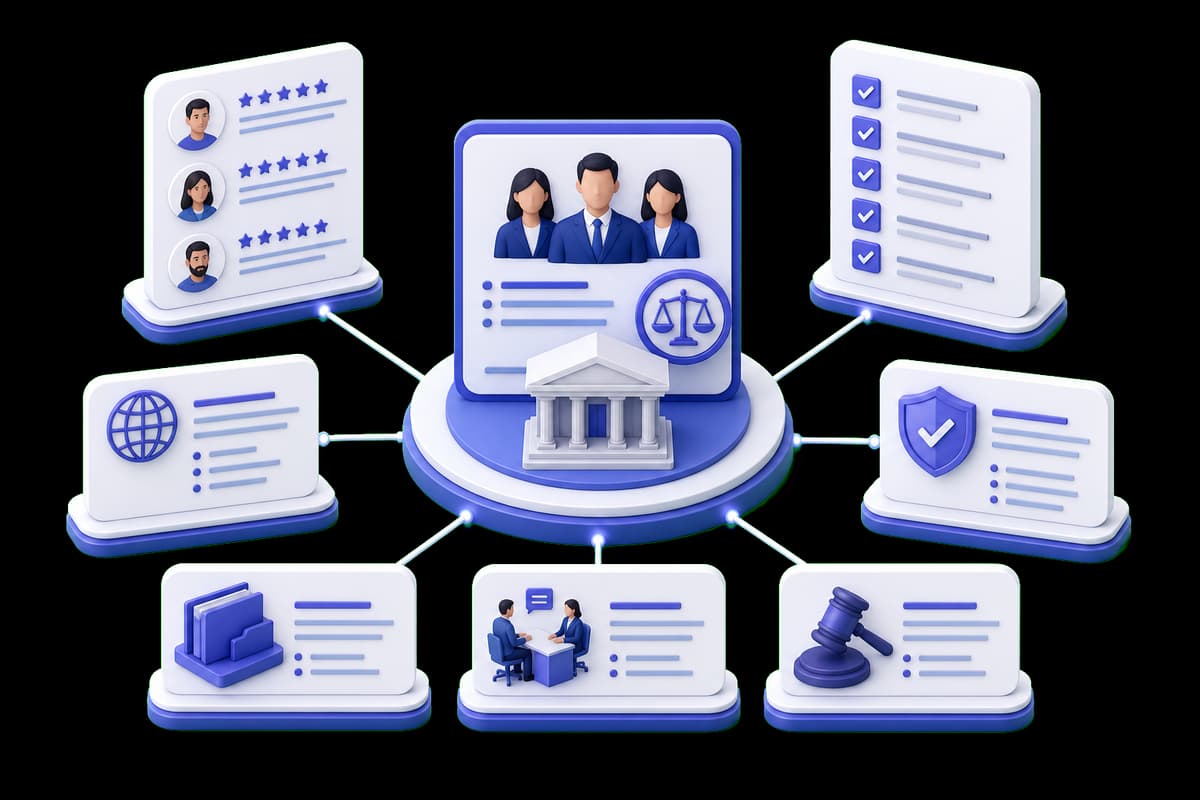
Keep Testimonials Accurate and Properly Contextualized
Rules governing legal advertising and testimonials vary by jurisdiction. Firms should review applicable bar rules before requesting, republishing, or promoting reviews and should never imply that a past result guarantees a similar outcome.
What Professional Conduct Rules Say About Law Firm Reviews and Testimonials
Law firm review management operates under a layer of ethical obligations that does not apply to most other industries. Understanding what professional conduct rules permit and prohibit is the foundation of any compliant reputation strategy.
ABA Model Rules and testimonial advertising restrictions
In the United States, legal advertising is regulated by each state's rules of professional conduct, which are typically based on the ABA Model Rules. Model Rule 7.1 prohibits communications that are false or misleading about the lawyer or their services. This applies directly to how a firm can use, republish, or promote client reviews. A review that says 'the best lawyer in the city' may be considered a comparative claim that is difficult to substantiate. A review that implies a guaranteed outcome—'they won my case in three weeks'—may create a misleading impression about what the firm can deliver for other clients. The firm that republishes or promotes such a review in its own marketing materials can be held responsible for the content. Most state bars require disclaimers when case results are referenced, and some states have additional specific rules about testimonials in legal advertising.
How confidentiality restrictions shape public responses
Attorney-client privilege creates a response constraint that law firms often underestimate. When a client leaves a negative review—even one that is factually inaccurate—the firm cannot respond by disclosing what actually happened in the representation. The attorney-client privilege belongs to the client, and disclosing privileged information in a public forum, even to correct a false claim, is an ethical violation in most jurisdictions. The practical implication is that law firm responses to critical reviews must be more general than responses in other industries. The standard compliant approach: acknowledge that the reviewer's experience matters, state that the firm takes all feedback seriously, and invite the reviewer to contact the firm directly through a private channel to discuss their concerns. Firms should have this template reviewed by their general counsel or bar compliance team before publishing any response.
Why Different Practice Areas Require Different Review Strategies
A law firm's review strategy should not be uniform across practice areas. The type of client, the nature of the engagement, the emotional context of the matter, and what prospects are actually looking for in reviews differ significantly between practice groups.
Personal injury, family law, and criminal defence: high emotion, high volume need
Practice areas where clients are going through significant personal stress—personal injury, family law, criminal defence—generate the most review activity, both positive and negative. Clients in these areas often feel strongly about their experience and are more motivated to share it publicly. For these practice groups, review volume and rating consistency matter most: a PI firm with 200 reviews and a 4.6 average is significantly more competitive in local search than one with 40 reviews and a 4.9 average, because local search competitors in this category are typically well-reviewed. The review invitation should be timed carefully: after the matter resolves, not during active litigation, and should make clear it is about the service experience—not the legal outcome.
Corporate, M&A, and commercial: depth over volume
For firms serving corporate clients, review volume is less important than review specificity. A corporate general counsel choosing an M&A advisor or employment litigation firm does not rely primarily on Google review counts. They look at specific evidence of industry expertise, responsiveness, and how the firm handles complex matters. For these practice areas, the more valuable review signal is often found on specialist legal directories and peer-ranking platforms—Chambers & Partners, Legal 500, Martindale-Hubbell—rather than Google or Trustpilot. A corporate firm's Trustpilot or Google profile may have relatively few reviews, and that is consistent with the market. The investment in reputation for this segment is better directed at directory submissions, client feedback programs, and thought leadership than at high-volume public review campaigns.
Law Firm Review Management Questions
Answers about confidentiality, legal advertising, client invitations, responses, and local profiles.
Prospective clients may use reviews to understand responsiveness, communication, professionalism, and the service experience before contacting a firm. Reviews cannot predict legal outcomes.
Yes, but the response should not confirm representation or reveal privileged, confidential, or case-specific information. Keep it general and provide an appropriate private contact route.
No. That can distort the review profile and create ethical or platform-policy concerns. Eligibility should not depend on the result of a matter or expected sentiment.
Rules vary by jurisdiction. Firms should review applicable professional-conduct, advertising, confidentiality, and platform requirements before creating an invitation process.
A reviewer may describe an experience, but firms must avoid promoting misleading claims or implying that past results guarantee future outcomes. Required disclaimers may vary by jurisdiction.
Maintain accurate profiles for each office, establish firm-wide response and escalation rules, and ensure local teams follow the same confidentiality and advertising standards.
Learn More About Reviews for Law Firms
Practical guides on Yelp, Google Reviews, and review platform strategy for law firms and legal professionals.



Explore More Professional Reputation Solutions
Discover review strategies for other businesses where trust and confidentiality matter.
E-commerce
Build buyer confidence with a stronger public review presence for your online store.
Explore IndustrySaaS Companies
Support software evaluation and sales with credible review signals across the customer journey.
Explore IndustryDigital Agencies
Turn client feedback into visible proof of service quality, reliability, and expertise.
Explore IndustryFinancial Services
Strengthen customer confidence with transparent reputation management for financial brands.
Explore Industry
Build Trust Without Compromising Confidentiality
Discuss your offices, practice areas, and professional requirements before planning a review campaign.